
Veterans List
This page began as a record of veterans personally visited and recognized by NCO Sgt. Richard Erschik. Today, it has grown into a nationwide archive where veterans from across the country are listed, recognized, and remembered through their photos and stories—whether submitted by the veteran or by family members in their honor.
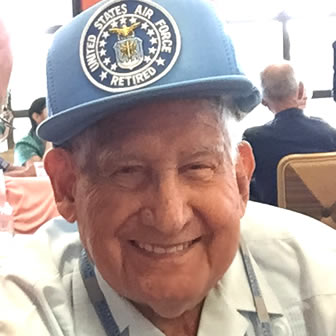
Manuel J. Chavez, Lt. Col. USAF Retired
In 1936 Manuel Chavez was a member of the 120th Combat Engineers, 45th Division. He obtained the rank of Tech. Sgt. when the unit was called into active duty in Sept 1940 in preparation for WWII. During 1942 he was an aviation cadet and following graduation as a pilot and second lieutenant he was assigned to Boca Raton Army Airfield, Florida where he met and married Bernice Butler, a lovely Army Air Corps nurse.
By February 1945 he was promoted to Captain and attended Command and General Staff School. During August 1945 he was transferred to the Pacific to join the 5th Air Force in the occupation of Japan as a pilot and Air Inspector of the 5th Air Force Service Command. After WWII ended he graduated from US Army Counterintelligence School and served in Puerto Rico and Panama as commander of CIC units. In April 1947 he was honored to be selected and appointed a Regular Officer in the grade of Captain, and in September he became a Regular Officer in the new United States Air Force. From 1950 to 1953 he served as Assistant Air Attaché to Central America while home based in Guatemala.
Learn More
Numerous other Air Attaché assignments included Peru, Bolivia, Venezuela, Dominican Republic and Haiti. From 1960 to 1964 he was attached to the Miami CIA office during the Bay-of-Pigs invasion and the Cuban Missile Crisis. During that time he returned to the Dominican Republic on a 90 day TDY to assist the Consulate General in determining the position of the Dominican Armed Forces on the last days of the Trujillo dictatorship. During his last two years, before retirement after 29 years of military service, he was a counterinsurgency staff officer at the US Southern Command.
Lt. Col. Manuel Chavez’s awards include: The Air Force Commendation Medal; Joint Service Commendation Medal; A Golden Key to the Panama Canal. His education accomplishments include: An Associate degree from Woodbury College California; A BA in International Relation from Florida International University. Military schools he attended include: Army Engineering School; Army Flight School; Air Inspector School; Army Command and Staff School; Air Force Command and General Staff School; Strategic Intelligence School.
He was a Veteran Visited, by SGT Erschik, 20 July 2015.
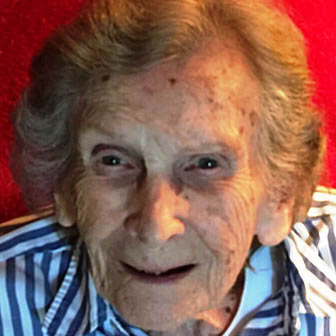
Ruth Shafer Fleisher – Women Airforce Service Pilots
Iam proud to have Ruth Shafter Fleisher be the first female represented on the Veteran Visitor website.
The daughter of an airplane mechanic who later managed an airport in Rochester, N.Y., started logging flights as early as age 13. She said she flew “anything she could” and during her military service, among many other notable accomplishments, she tested AT-6 warbirds.
After the WASPs were disbanded in 1944, she got a commission to join the Air Force as second lieutenant and retired from the Air Force Reserve as a major. She later became one of the first women to work in a control tower at Philadelphia International Airport.
Learn More
Fleisher earned her pilots license and ground school instructors rating before the start of World War II. After the war started, Fleisher joined the Civil Air Patrol and was assigned to Coastal Air Patrol as a communications officer on Long Island, New York. She joined the WASP in 1943 and trained at Avenger Field, Sweetwater, Texas. Following graduation, Fleisher was assigned to Gunter Army Air Field in Gunter, Alabama, where she instructed cadets on Link trainers, tested recently repaired planes, and occasionally ferried personnel or documents to various locations. Fleisher attended Officer Training School in Orlando, Florida.
When asked if “there are any funny things she recalled” she said “This was not in training; this was after I graduated and got assigned to an air base. They wanted some airplanes taken from one place to another. There were, I think, two or three of us girls and two or three fellows. Naturally there had to be a flight leader, so they appointed one of the young lieutenants to be the flight leader and we were all supposed to follow him to a particular air field.
I can remember we were in the Alabama-Georgia area, and we did fine for a while. Then, all of a sudden, I thought to myself that he’s supposed to start turning north to go to the field, because if he didn’t we were going to pass it. And I thought, well, that’s kind of peculiar, but he was the flight leader. Sure enough he missed the field and threw up his hands indicating he didn’t know where it was. I said OK, follow me. I motioned the direction we should go and took the lead. I got us to the field, but of course, nobody said much about that afterwards.”
GOOGLE Ruth Shafer Fleisher for many more stories and much more information about this amazing veteran visited.
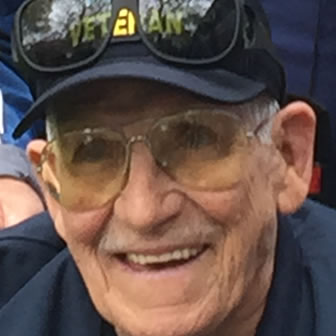
Owens (OB) Thomas – U.S. Navy
Owens B. Thomas joined the U.S. Navy the day after his 18th birthday, shortly after graduating from Hapeville High School in Atlanta, Georgia. He went through boot camp and radio school in Bainbridge, Maryland.
After going through the rigors of LST (Landing, Ship, Tank) training he was assigned to the tank landing ship USS LST-1027 which was commissioned on 7 June 1944 in Quincy, Massachusetts under the command of LT. Paul H Shropshire Jr.
Learn More
During World War II the USS LST 1027 was assigned to the Asiatic-Pacific Theater and participated in operations Leyte and Luzon and the consolidation and capture of the Southern Philippines. Owens Thomas US Navy Radio Operator 2nd Class received the American Campaign Medal, Asiatic Pacific Campaign Medal, World War II Victory Medal, Philippines Unit Citation Medal, Philippines Liberation Medal, and the Navy Operation Service Medal.
His engraved memorial brick is part of the military veteran recognition program at the entrance to Homestead Miami Speedway in Homestead, FL. OB was also the catalyst behind the extension of the Veteran Visitor program that now also acts as a clearing house and distribution center for used walking and mobility assistance devices.
Before OB passed, he asked that his walkers, wheelchair, and electric scooter be passed on FROM a veteran, TO a veteran FREE of charge – with their understanding and agreement that they do the same when the item is no longer needed.
Thank you OB for your generosity and thoughtfulness. RIP assured that your wishes are honored, as you now are, by those who knew you.
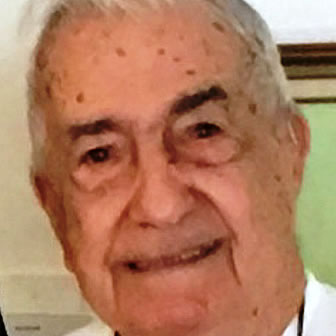
Carl Nucilli – U.S. Coast Guard and Navy
Carl began our brief get-together by telling me how his father didn’t want him to join the service at his young age. So he waited until he was 17+ and joined anyway.
His main interest in joining was to take advantage of the GED (General Education Development) program that was being offered as enlistment enticement at the time just before the bomb was dropped on Hiroshima. He was serving on a Coast Guard mine-sweeper at the time and commented on how the world today would be a much different place if it weren’t for that bombing. Beginning specifically with what was building up to be a considerable loss of life on both sides.
Learn More
He laughed when he recalled the time when he “put in” to go to Korea he was sent to Alaska. Then when he “put in” for Vietnam he was told there was no need for destroyer escorts there, so his request was denied.
Carl went through both the military enlisted and warrant office programs. He served 4-years in Coast Guard intelligence and carried the rank of W4 Warrant Officer when he was discharged after his last 4-years patrolling the Western river system.
When I asked him if he still has his uniform his response was similar to many others that were asked the same question. “Yes, but it doesn’t fit anymore.”
After his military service Carl relocated to Naples, FL and drove a motor coach back and forth from the airport and took tourist visitors to Everglades city to see the alligators.
It was the BIG tips he remembers receiving from passengers that brought a smile to his face.
Today, Carl lives in Homestead. FL.
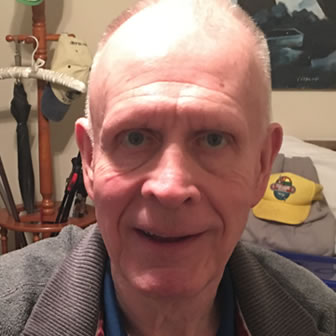
Donald Fecteau – U.S. Airforce
Although the first thing Donald did during his veteran visit was apologize for his onset of Parkinson’s disease as reason for his stuttering, his memory of his time served in the military was vivid.
Some of his recall included the fact that his friend joined the military the day after he did and went to Alaska. He never told Donald he was in until they both got out.
The first thing Don recalled and talked about was his PT (Physical Training) requirement during basic training at Lackland AFB in San Antonio, TX. He chuckled as he recalled the phrase “Remember the Alamo” because visiting the Alamo was a personal thrill while he was stationed there. He then recalled marching at night with a red light to illuminate the way, and went on to talk about the push-ups. Oh how he remembered the push-ups and the fact that if his T-shirt got any dirt on it during the push-ups, how he would have to do more.
Learn More
For some reason, the standard obstacle course was not available during his basic training and the OIC’s (Officers In Charge) had to create one that was harder than the dedicated one.
Donald was trained in Illinois and became an accomplished welder, after which he was shipped off to the Strategic Air Command in Glasgow Montana where he worked on B52 bombers and bomb assembly. When he asked me if I ever heard of a Christmas tree I asked “do you mean the green ones?” He chuckled and went on to describe how B52’s lined up in a Christmas tree fashion for immediate and staggered takeoff to get airborne as fast as possible.
Although he never flew on the Air Force aircraft he repaired, years after his service, that included 16-months in the Philippines, he was awarded a medal by his congresswoman for his time served during military conflict. He recalled that while in Montana he played the card game Rook a lot with another SGT and his wife, saw every movie that came out, and bowled in 2 military leagues.
After the military he took advantage of the GI Bill and worked for a company in NY that made trash compactors. He later worked in Orlando for Disney as a greeter. Today, Donald lives in Homestead, Florida where he was visited by SGT Erschik.
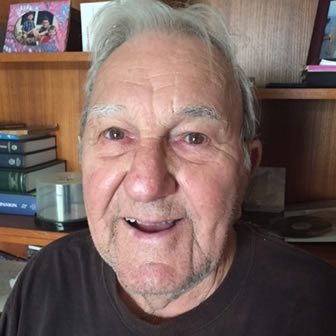
Helo LaChapelle, WWII Veteran, U.S. Navy & USAF
Helo was one of a more reserved veteran visited when it came to disclosure of details relating to his actual service time. But he was not at all without humor in his Navy remembrance of outrunning enemy submarines.
One of his Air Force memories involved the need for his fellow servicemen to just “figure things out” when it came to adaptation of devices used for necessary protection and aggression.
When it came time to increase armament on fighter planes he described his involvement in making a device to adapt a 20mm gun to the infrastructure of an airplane; and how everyone chipped in with various expertise. A piece of angle-iron here, a few nuts and bolts there, a quick test, a few adjustments, and it either serviced its purpose, or everyone started over.
Learn More
As for the War effort, a typewritten CITATION that hangs on his wall describes and recognizes a sign-of-times with the following wording;
“For extraordinary heroism in the action against enemy forces in Atlantic Waters from November 1, 1942, to June 30, 1943; Operating PBY Amphibious Aircraft over North Atlantic and Artic waters off Iceland, Patrol Squadron EIGHT FOUR provided wide coverage of assigned areas and succeeded in sinking six enemy German submarines. With only rudimentary navigation facilities available, this squadron operated efficiently over icy waters and under extremely hazardous conditions of difficult terrain and severe weather, including ice, snow, as sleet and freezing rain prevailed in the area. By their courage, determination and outstanding performance of duty, these pilots and air servicemen not only caused severe losses to the enemy but also played an important role in the development of Iceland Air bases, thereby contributing greatly to Allies success in crushing the German submarine activities in the Atlantic. This gallant record of achievement in combat reflects the highest credit upon Patrol Squadron EIGHT FOUR and the United States Naval Service.” Signed (for the President) by Secretary of the Navy Francis P. Matthews.
On the same wall, for similar valor, hangs a Presidential Unit Citation award for his PATROL SQUADRON EIGHTY-FOUR, dated 29 August 1950.
Today, at 90 years old, Helo lives quietly in S. Florida where he visits his local American Legion and enjoys completing woodworking projects.
Helo was a veteran visited by a veteran visitor August 14, 2015
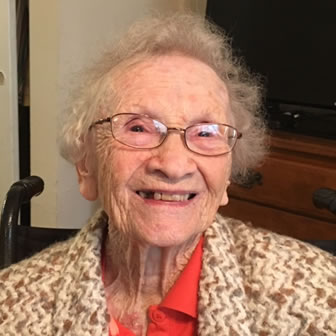
Dorothy Brown – USO Volunteer
During her veteran visit, Dorothy beamed with some of the remembrances of her very active younger years. And while she didn’t serve IN the military, herself, she certainly contributed TO it as a very active and devoted volunteer in the USO.
The USO was founded in 1941 by Mary Ingraham in response to a request from President Franklin D. Roosevelt to provide morale and recreation services to U.S. uniformed military personnel. And that’s exactly what Dorothy did. Roosevelt was elected as the USO’s honorary chairman. This request brought together six civilian organizations: the Salvation Army, Young Men’s Christian Association (YMCA), Young Women’s Christian Association (YWCA), National Catholic Community Service, National Travelers Aid Association and the National Jewish Welfare Board. They were all brought together under one umbrella to support U.S. troops. Roosevelt said he wanted “these private organizations to handle the on-leave recreation of the men in the armed forces.”
Learn More
According to historian Emily Yellin, “The government was to build the buildings and the USO was to raise private funds to carry out its main mission of boosting the morale of the military. Dorothy Brown played an integral part in seeing to it that our troops had an enjoyable time when they visited her USO in the 1940’s in the suburbs of Philadelphia, PA.
At 95 years old at the time of our veteran visit, she mostly recalled a lot of dancing and visits to the newly established and nearby Institute of Technology that was a huge hit to our soldiers interested in mechanics and science. When the war ended, she worked in a local bank for 7 years as a bookkeeper and remained in and around PA for most of her life.
A fall and fractured vertebra brought her to FL where the weather seems to be more tolerable for her than the snow she remembers back in PA. Her husband passed many years ago and their son is a retired Dade County police officer that tends to her needs today. She is an active watercolor artist and plays bingo regularly. It was truly a pleasure to meet her and enjoy the parts of her history she was able to recall.
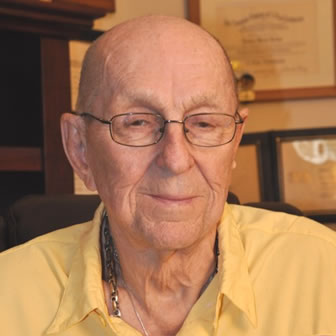
Robert Koller, Corporal, U.S. Army Korean War
Having been an experienced x-ray technician at St. Luke’s Hospital in Cleveland, and chief of the x-ray department in Mansfield General Hospital in Mansfield, Ohio prior to his enlistment, Robert signed up to serve as a medic.
Shipping out aboard the U.S. Naval Ship General C.C. Ballou with almost three thousand men, Robert arrived in Taejon, Korea where he was temporarily assigned to a military police unit until an opening became available in the x-ray department at the 171st Evacuation Hospital. The compound’s Commanding Officer assured Robert that his skills were needed and the Lieutenant in charge of x-ray invited him to visit the department to look it over.
Learn More
At the time of his arrival, the front lines were about two hundred miles away. The weather was sub-zero at night and Robert quickly suffered from frostbite while on guard duty with the military police unit, working from noon to 4 p.m. and again from midnight to 4 a.m. After about ten days, the Commanding Officer informed him that he would be transferred to x-ray. The great majority of patients were Koreans (ROK) working for the U.S. government but there were a few Army personnel also in the compound’s hospital. It was always busy as the injured were flown in day and night. Surgeries were performed around the clock in the two operating rooms, each with three tables, and the x-ray machines were in constant use.
When he wasn’t working in the x-ray department, Robert worked at the NCO Club, played softball for the compound’s team, watched old movies, visited a local orphanage with toys and supplies from the church back home, recorded music for special events with a tape recorder he picked up in Korea, and shot lots of photos with a camera he also bought there. He went on his first R&R to Tokyo in April. There were many USO shows but the most memorable featured Marilyn Monroe and Terry Moore. Even the Harlem Globetrotters made an appearance to play basketball for the soldiers.
In July, Robert was promoted to Corporal. By this time, the hospital had grown from about six hundred to a thousand patients. Throughout the hot rainy summer, fighting continued and badly injured patients came in numbers large and small. The ravages of war were horrific and it took miracles to save many of them. In the meantime, rumors of a peace treaty were constant.
In November, Robert and about fifteen of his buddies from the 171st were transferred to the 25th Station Hospital outside of Taegu. Before he left the 171st, he helped to close down the x-ray department in preparation for transfer of the compound to the ROK. The 25th Station Hospital was reputed to be the best in Korea and, upon arrival, he was not disappointed.
Over Christmas, Robert went to Tokyo on R&R again. Along with his new camera, he saw much of the city and even watched a movie being filmed in a public park. When he returned to Taegu to celebrate the New Year, Robert’s enlistment was coming to an end. To his surprise, an error was made and he was not scheduled to leave at the end of January as he should have based upon his days of service. In late February of 1954, Robert shipped home, with almost three thousand military personnel and their dependents, aboard the U.S. Naval Ship General E.T. Collins, to Fort Mason in San Francisco. Arrival was on March 19 and he was on deck to see the Golden Gate Bridge. From there, he officially separated service in Ft. Knox, Kentucky before returning to Ohio to buy his first car and begin working again right where he left off before this unforgettable life changing experience in the service of this great country.
Robert was a veteran visited by a veteran visitor August 22, 2015
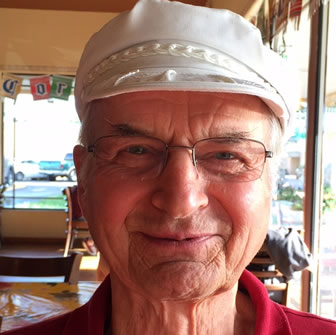
Donald Schelgel EMS SS U.S. Navy
Don Schlegel never really left the Chicago area other than for his time in the Navy. At about age ten he had an urge to be underwater. He first attempted breathing 12” underwater through a garden hose attached to a float. For his 15th birthday he received his first real SCUBA equipment made from a surplus B-29 airplane breathing regulator. When he was 17, he joined a submarine reserve unit in Chicago and trained on the USS Silversides (SS-236) that never left the dock.
Some weekends the Navy would fly him to New London Connecticut to train on an operational submarine. Following 2-years of training, the Navy felt he was ready for active duty and flew him to Norfolk, VA to meet the USS Cubera (SS-347.) The Cubera was a remodeled WWII diesel sub that had less space than her predecessors, because she carried twice as many batteries for power. He was delighted to be on a working sub for 10-months.
Learn More
Diesel subs served four meals a day to make up for unpleasant living conditions. Officers and enlisted personnel ate the same meals, usually lobster or steak just about every day. A lot of the sub’s maneuvers were classified SECRET.
Life on the submarine ranged from absolute boredom to controlled panic. Everyone did exactly what was required to get the sub to the surface. When everything was going well, duty watches were 4hrs on and 8hrs off.
Don was officially titled an electrician. On a diesel boat that meant he was in charge of all 504 battery cells each weighing a ton. If you were good at a particular job, sailors were given extra duties. He was good at his job, so in addition to electrical duties he stood sonar watches, he serviced as a look out, he was a spare parts petty officer for other electricians, and he was the Chaplain.
When a crew member’s mother wrote the Captain complaining her son did not have church services at sea, the Navy gave Don a minister’s license and because he did not drink or carouse in every port, he was assigned the position of the sub’s Chaplin.
At his time of discharge he was being paid $400/month including all benefits, while his first job out of the Navy paid him $300/month with no benefits.
Don spent a total of 6 years in the Navy. 2 years active reserve, 2 years on the sub, 2 years standby reserve. He married his high-school sweetheart and they are still together after 57 years.
After his military service Don worked for Johnson and Johnson as a Financial Controller until he retired at a young age of 44. He and his wife have 2 daughters and spend their time between their Chicago area home and Key Largo, FL. He belongs to a group of Ex Submariners that meet once a month to swap sea stories. They are active in volunteering at Veteran’s Hospitals, the Abraham Lincoln National Cemetery in Elwood Illinois, Boy Scouts and other worthwhile projects.
Donald was a Veteran Visited by SGT Erschik on 28 August 2015
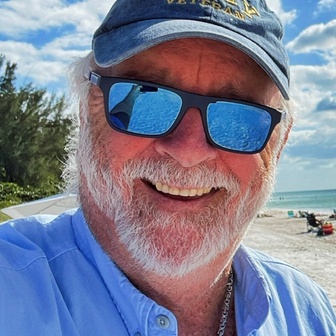
Richard Erschik Army NCO Sgt E5
Richard Erschik was just a 20-year-old kid from Chicago when his draft notice arrived in October 1965. The Vietnam War was escalating. He had a job, friends, and an iconic black 1957 Chevy Bel Air he loved. He sold the Chevy for $750, said goodbye to his father and sister, and entered an Army he knew little about.
Two years later, he would be honorably discharged from active duty and leave the Army.
Assigned to A Battery, 1st Battalion, 16th Artillery, 2nd Armored Division at Fort Hood, Texas, Richard became an MOS 13D40 Senior Assembly Specialist for the MGR-1 Honest John, nuclear-capable, surface-to-surface, rocket. Still barely old enough to legally buy a beer in some states, he was entrusted with assembling and arming one of the most powerful field-deployable weapons in the Army at the time.
Learn More
During one firing exercise, an armed Honest John failed to launch. While others watched with uncertainty, Richard walked out to the rocket and disarmed it by hand. He was 21 years old.
His nuclear responsibilities required a secret security clearance. Even his father and sister couldn’t know what he actually did in the service. For decades afterward, when people asked about his Army service, his explanation was usually simple: he worked on equipment and the food wasn’t as bad as they say. “Army stuff.”
Richard returned to Chicago in October 1967 and resumed civilian life. But the Army came home with him. The discipline, confidence, responsibility and leadership he learned during those two years helped shape the businessman, entrepreneur, national speaker and author he later became. As he writes in his books, “You don’t leave the Army. The Army leaves with you.”
Decades later, those experiences also helped inspire this website Veteran Visitor and its unique initiative. Richard began visiting fellow veterans, listening to their stories and recognizing their service while they were still here to receive that recognition.
Nearly six decades after leaving Fort Hood, Richard finally told his own story in his books Greeting and Me and Honest John. Available by title on Amazon.
He was not looking to be called a hero for his writing. He wanted his family—and future generations—to know what happened, who those young Cold Was soldiers were, and why their stories should never disappear.
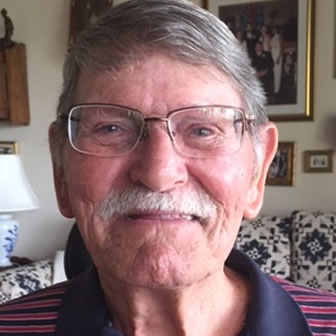
George Perrin Lt. Col. U.S. Army Retired
George Elmer Perrin was born 15 July 1931 at Ft. Sam Houston hospital in San Antonio, TX to Bessie and Elmer Perrin.
George’s father, Lt. Col. Elmer Perrin was a pilot in The Army Air Corps and was testing a B-26 Marauder airplane on 21 June 1941 in Maryland for the Glenn L. Martin Company when it crashed. The flight was later found to be sabotaged. Later in 1941 an Air Base was dedicated in the name of Lt. Col. Perrin in Denison, TX. His son George was nine years old at the time of his father’s death when his family returned to San Antonio.
Upon graduation from high-school George applied for West Point. Following a year of prep school in Washington, DC he entered West Point in 1950. He graduated in 1954 as a 2nd Lt. in Field Artillery.
Learn More
His postings are many and include; General Opps in Ft. Sill, OK. Jump school in Ft Benning, GA. He was a Genera’s aide at Ft. McPherson, GA. In Friedberg, Germany he was serving as a Company Commander when he met and married his wife Carolee Higgins the daughter of a Naval Captain who was stationed in Heidelberg, Germany.
George is a graduate of General Staff College in Ft. Leavenworth, KS and holds a Masters Degree in Technology Management from Washington, DC.
In 1964-65 he served in Vietnam as a sub sector advisor. In Germany he served as a Battalion Commander and Director of the weapons assembly department. In 1971-72 he again served in Saigon Vietnam as a J3 and he retired from the Army in 1976.
George was awarded numerous ribbons and medals during his military career including The Bronze Star for “Meritorious Achievement in Ground Operations Against Hostile Forces” dated 24 August 1962. Today, he and his wife Carolee live in South Florida.
George was a Veteran Visited by SGT Erschik on August 26, 2015
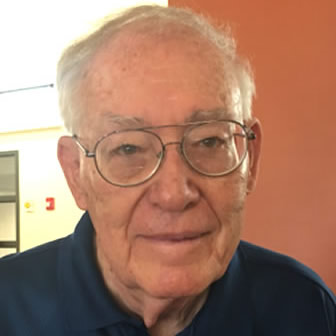
Commander Bob Jensen, USN retired
Bob Jensen grew up in a small farming town in Northwest Iowa. While he was still in high school the Harvard graduate son of the local undertaker attempted to recruit Bob into the Navy Reserve as a cryptologist.
Later when Bob enlisted in the regular Navy at age 19 his parents were mildly supportive. While still in boot camp he was selected out for the Naval Security Group, probably as a result of the efforts of the Navy Reserve commander in Sioux City Iowa.
The Navy trained Bob in the German language at the Naval Intelligence School in Washington DC, in Polish at the Defense Language Institute in Monterey California, and in Special Arabic at the National Security Agency in Maryland.
Learn More
He served three tours at the National Security Agency, one in Bremerhaven Germany, in the Philippines, in Iceland and at the US Embassy in Nicosia Cyprus as well at the Naval Security Group Headquarters where he was a member of the Inspector General team and on the operations staff. His final tour was in Homestead Florida first as the operations officer and then he fleeted up to Executive Officer.
For the last 33 years he has served as an officer of the First National Bank of Homestead, later renamed the 1st National Bank of South Florida. Bob has served in the Miami-Dade community in many capacities and has maintained a close relationship with the military through the Military Officers Association of America, the Air Force Association and the Military Affairs Committee of the South Dade Chamber of Commerce.
Bob and his wife Meda travel the country in their RV and reside in Homestead, FL.
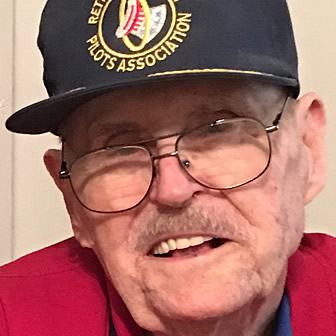
U.S. Army Sgt Edward Highfill – also a POW
As he proudly stated from crystal clear memory when he was visited, Ed spent 5 years, 2 months, and 11 days in the Army including time as a POW.
U.S. bases of service included Fort Knox and Camp Dix as a motor pool Sgt. He spent most of his time in the service training soldiers as mechanics and understandably spoke little about his time as a POW.
He did, however, share that at the time of his POW release, his request for a peanut butter sandwich continues to be met today as his friends, loved ones, and associates that knew of his ordeal continue satisfying his request with the welcomed gift to which jelly has been added along the way.
Learn More
Sgt. Highfill had the distinct honor and privilege of serving as a vehicle driver during WWII for none other than the infamous General George S. Patton who at his height of 6’-2” would sometimes lay inconspicuously prone in the backseat and tap Ed on the shoulders with his feet to indicate his preferred direction of travel.
After his time in the service Mr. Highfill went on to work for Eastern Airlines as a flight instructor, navigator, and eventually became a pilot of their Electra and 727 model aircraft for more than 30-years.
Today Ed resides in Homestead, Florida and shared his story of how in 1940, from December 2-24 he hitchhiked all the way from North Carolina to Miami and lived off of the coins the truck drives gave him along the way. “Sometimes they’d even let me sleep in the back” he said.
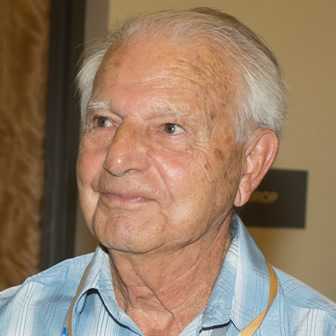
Pat Paul Guggino US Navy
Pat went to and through various Naval Training Stations including Sampson, NY for boot camp; Great Lakes, IL for engineering school; Norfolk, VA outgoing unit and he was assigned to the USS Liddle D.E. 206 a destroyer escort in Charleston, SC.
The USS Liddle D.E. 206 escorted 3 round trips across the North Atlantic from NY City to Wales, England, Gibraltar, and Tunisia, Africa. Upon return to NY the Liddle was converted to a high speed transport and reclassified, APD 60, with 4 others, each to transport 200 troops, 1000 total.
The APD 60 joined the 7th Fleet in the Pacific and carried out 12 amphibious landings in the Philippines, Borneo, and Korea. In the battle for Leyte, USS Liddle/APD 60 was the first APD to be crash dived upon by a Japanese Kamikaze pilot in the Battle of Ormoc Bay on December 7, 1944. The Liddle splashed 5 of the attackers with her casualties reported to be, 37 killed and 42 wounded. The Liddle went on to San Francisco for repairs and returned to the Philippines.
Learn More
After Japan surrendered, the USS Liddle aided in clearing Japanese mines from the shipping lanes of the Philippines and on to China.
Pat was discharged on 7 April 1946 as a MM2-Machinist Mate 2nd Class with recognition and awards including the American Theater Medal; the European Theater Medal; the Victory Asiatic Pacific Medal 2 Stars and the Philippine Liberation Ribbon 1 Star.
Non-Military Career.
I was a General Contractor in Rochester, New York and built custom homes from 1946-1957
I Moved to Homestead 1957 and worked in sales of Architectural products for new school construction.
I consulted with School Board Architects and the Superintendent of Miami School Board to upgrade existing Chalkboards, lockers, metal toilet partitions, etc.
Major request from Superintendent; create partition that would eliminate the odor caused by the Metal Toilet Partitions used in the toilet rooms of schools and therefore I created the Laminated Plastic (Formica) toilet partition to be odor free and became the specification for the toilet partitions used in the schools.
In 1977, I formed a corporation named Constitutional Products Incorporated with my son Joseph Guggino to manufacture laminated plastic cabinets to Architectural Specifications for use in Schools and Institutions in Florida, Georgia, and Alabama.
I made the Honor Flight to the WW2 Memorial in 2012 with other Vets from South Florida.
I retired in 1986 and traveled extensively in the U.S.A. and in Europe with my wife of 69 years, Christina.
Today Pat lives in Homestead, FL.
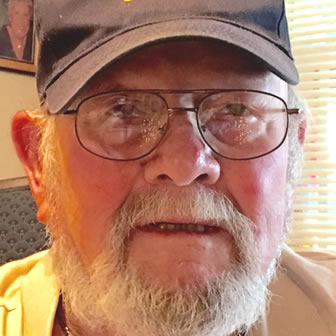
U.S. Navy – Chief Petty Officer Ralph Tingley
He joined the Navy when he was 17 and got to wear both a Navy and Marine uniform during his time in the service because of his assignments.
Ralph spent most of his military time serving as a medical technician. He also served as a nicknamed “Bubblehead” aboard a variety of Submarines including the Threadfin, Chopper and Spankfish and later, as a nicknamed “Skimmer” he served on the Destroyer 862 named the Vogel Sagnag.
He went on to serve proudly with the 1st and 3rd Marine division followed by a one year tour of service in Japan; then on to the 3rd div tank battalion in Korea, before his brief tour of service in Vietnam.
Learn More
When he retired from the Navy he located to Oldsmar, FL before moving with his wife Betty of (now) 64 years to Homestead, FL where they are still together with a stray cat that makes Ralphs bed his home.
Ralph worked with 3 or 4 medical doctors in Key West, FL as their medical technician. At the time of his civilian work retirement, he was employed as a “Cop” for the Florida Marine Patrol.
The June 28, 1977 issue of US Magazine includes a feature article entitled “Cop Ralph Tingley always gets his man-even in the deep.” It describes how Ralph caught a lobster poacher underwater and hauled him to the surface for arrest. In his office he displays a picture of himself next to the legendary Lloyd Bridges from the popular TV services in 1958-1961 named Sea Hunt.
Ralph rode motorcycles across country namely on a Harley and a Yamaha.
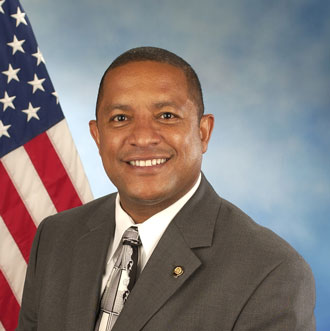
Major Harry Pillot, U.S. Army, retired
Harry Pillot entered the Army via a Reserve Officers Training Course. He was commissioned a 2nd lieutenant in the Army Air Defense Artillery after graduating from the University of Puerto Rico. He reported for Officer Basic Course at Fort Bliss Texas in November 1977.
His first assignment was Short Range (Chaparral, Vulcan, Redeye) Air defense Systems Platoon leader with D Battery 1/67 Air Defense Artillery, 9th Infantry Division, Fort Lewis Washington. He also served as Control Officer and Executive Officer of the Personnel Holding Detachment (PHD) where he was responsible for the separation of recalcitrant personnel under other than honorable conditions. He was promoted to 1st Lieutenant in 1979.
Learn More
He was then assigned to HHB 2/67th Air Defense Artillery Battalion, 1,st Infantry Division, Goeppingen Germany, where he served as HQ’s Battery Executive Officer, Assistant S-3, Battalion Air Space Management Officer and Battalion S-4. He was promoted to Captain in 1982.
In 1983, he attended Officer Advanced Course at Ft Bliss Texas, where he was trained in the Hawk, Nike Hercules and Patriot missiles systems. After completing the Advanced Course, he was assigned to the HQ 1st Cavalry Division, Fort Hood, as Assistant G-3 (Training and Ranges). He then was assigned to the 1/68 Air Defense Battalion, 1st Cavalry Division as Assistant S-3 (Operations Officer). In 1984 he assumed command of D Battery 1/68th Air Defense Artillery.
In 1986, he was promoted to Major, and rebranched as an Operations Research Analyst, attending and completing the Operations Research and Systems Analysis-Military Applications (ORSA-MAC ) course. He was then assigned to White Sands Missile Range, New Mexico where he was responsible for close combat computer Modeling simulations. He worked with combat simulations at the Company through Corps level.
In 1991 he was assigned to the HQ 2nd Infantry Division, Camp Casey, Tong Dong Chong, South Korea. There he performed the duties of Force Integration Officer, responsible for the fielding and integration of new equipment to the Division.
In 1992 he was then assigned to HQ Test and Experimentation Command, Fort Hood, Texas, where he evaluated the operational capabilities of equipment for HQ Department of the Army level acquisitions. In 1994 The Army offered an early retirement, with full retirement benefits and pension, MAJ Pillot decided at that time to retire and serve the country in other venues.
MAJ Pillot’s awards include: Army Meritorious Service Medal (with OLCs), Army Commendation Medal (with OLCs), Army Achievement medal.
MAJ Pillot’s education includes a Bachelor’s of Science degree from the University of Puerto Rico and a Masters of Science degree from Florida Tech in 1989. His military education includes the Army Air Defense Artillery Officer Basic and Advanced Courses, as well as Command and General Staff College. He is a graduate of the Operations Research and Systems Analyst Military Applications Course, Army Logistics Management College (ALMAC), Ft. Lee, Virginia. Additionally, he completed the Reliability, Availability, and Maintainability (RAM) Course from ALMAC, and the Computer Simulation Course from the Avery and Law Technical College.
After his military retirement, MAJ Pillot continued serving as an Army Civilian, achieving the grade of GS15 before his 2nd retirement in 2016.
Today, Harry spends his time volunteering at the Nike missile base in Everglades National Park, Target Shooting, and participating in Cowboy Action Shooting.
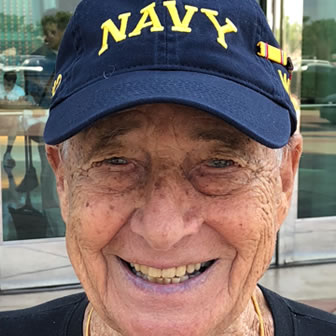
Arthur Frongello – U.S. Navy
Concerned that he would be drafted, Arthur left high school at the end of his sophomore year to join the Navy in September 1943.
He went through the last boot camp training that was conducted in Newport, RI and attended Quarter Master school in Cardington, RI.
From there it was on to PT Boat training in Melville RI after which he was immediately shipped off to Oran, Africa and assigned to PT Boat 302 of Squadron 22 in the Mediterranean Sea.
During the time Rommel was fleeing from Africa, the mission of PT Boat 302 and 11 others was to totally guard and blockade against German shipping in the Genoa, Italy harbor.
Learn More
Arthur described that it was much easier to observe and attack land targets from in close, than it was from far out at sea. And since they patrolled so close to land general quarters was sounded with a police whistle instead of the loud ships horns that would attract attention to the location of their PT Boat.
Arthur recalled one of the many humanitarian acts of kindness in which he and other sailors collected candy, so the kids in Cannes France would have and enjoy a memorable Christmas.
He also recalled his squadron finding a British warship in distress and sinking, from which they saved 26 lives before they had to cut the lines so the sinking ship would not pull their PT Boat down with it.
When the war ended, Squadron 22 was decommissioned and Arthur returned to high school to finish his education in 1948 at age 23. He then attended Harvard University where he studied Physics.
For 32 years, as a Department of Defense employee of General Electric in Lynn, MA Arthur was a pioneer in jet engine building and eventually a quality control chief.
He was always an entrepreneur and sold specialty combs that he manufactured in mass quantities and sold out of the trunk of his car.
In 2003 he sold the comb company and moved to Orlando, FL where he lives today.
He was a Veteran Visited by SGT Erschik on April 26, 2018.
“Go get em.”
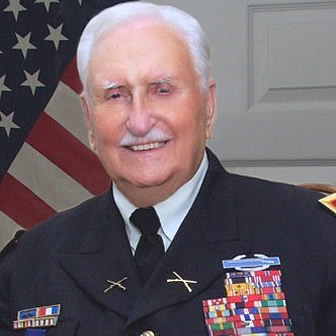
Glenn D. Frazier – Col. U.S. Army POW, Retired
Glenn D. Frazier joined the U.S Army on July 3, 1941 and requested to be stationed in the Philippine Islands. He attended four months of Army Ordnance Training School in Manila until his training was interrupted by the Japanese attack on the Philippines on December 8, 1941 just hours after the surprise bombing of Pearl Harbor.
For the next four months, Glenn relied on his Army training and country-boy ingenuity during the Battle of Bataan. Serving in the 75th Ordnance Company, he worked to keep the front lines supplied with ammunition. Promised reinforcements and supplies never arrived, but the American and Filipino troops fought off the invasion as long as they were able.
Learn More
Although left with orders to fight to the death, on April 9, 1942 General Edward P. King instead made the difficult decision to surrender to the Japanese. What General King could not have envisioned was the long grueling trek the weary troops would have to endure over the course of the following week. Glenn Frazier and his fellow captors would be forced to walk without rest or food for the next seven days in what would become known as the Bataan Death March.
Thousands of Americans and Filipinos died on the march. Those that managed to survive were sent to Japanese POW camps.
Glenn Frazier was soon shipped to the Japanese mainland where he was held in forced labor camps until the end of the war – over three years later.
This incredible story of bravery and survival is thoroughly documented in the spellbinding book “Hell’s Guest” available in print here > https://www.colonelfrazier.com/the-book and in Audible audio format.
Glenn’s listing, here, is the result of him autographing a copy of his book for my son Tim and his wife Wendee when they recently visited the USS Alabama in Battleship Park in AL. My son sent me a pic of the autographed book he had just received. I ordered it along with the audible version and listened to the entire book in 2 days.
Thank you to his beautiful wife, Terri, for her telephone conversation with me about the book and a movie that is in-the-works about this incredible story.
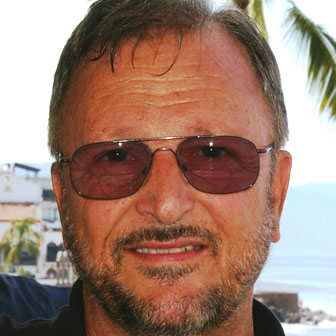
Frank A. (Tony) Fiore, LTC US Army Ret.
Tony was born an Army brat at Ft. Riley, KS. His father was a West Point graduate, Cavalry officer and veteran of WII. He grew up in a military family and followed his father’s assignments to Ft. Knox, Germany and Spain.
After completing Basic Signal Officer training at Ft. Gordon Ga., Tony continued Airborne at Ft. Benning. His active duty assignments were with the XVIII Airborne Corps. Ft. Bragg; 24th Infantry Division Augsburg Germany, US Army MILGROUP Bogota Colombia, and with the 25th Infantry Division CuChi Republic of Viet Nam.
He served his first tour with the 50th Signal Bn. XVIII Airborne Corps.
Learn More
In 1964 he was assigned to the Signal Bn. of the 24th Infantry Division in Augsburg Germany. He relearned German. He served as a Platoon leader. During that tour, the Army decided to assign Signal officers to Combat Brigades as the Signal Officer on the Brigade staff. Tony jumped at the chance and took initial Brigade Signal Officer training at Lingries, graduating at the top of his class. After graduation, he was assigned as the first Signal Officer in the 2nd Brigade 24th Infantry Division.
While this was neither Aviation nor Military Intelligence, it was out of the clutches of the Signal Corps and into true combat units.
When the Army discovered that Tony was fluent in Spanish, they sent him to Colombia to be the Signal Officer in the USMILGRP. The Signal Corps needed a Spanish fluent officer for their Colombia assignment. Two years into the Colombia assignment, the Signal Corps “discovered” that Tony would need to go to Viet Nam to be promotable and curtailed his Colombia tour with orders to Viet Nam.
Upon arrival in Saigon, he was assigned as the Signal Officer for the 2nd Brigade 25th Infantry Division in Cu Chi.
Upon his return to the US, Tony visited the Signal Branch in Washington, DC and requested assignment to a list of available openings at (Signal Attaché in Madrid; Foreign Area Specialist program in Latin America, COPECOMI in Panama) and was denied all of them.
Tony submitted his resignation and became a civilian in February, 1971.
He got his first civilian job with Air Signal, a paging company subsidiary of MCI and installed paging operations and equipment in the Bahamas, Mexico, Costa Rica, Thailand and Argentina.
From there he went to work with TRT telecommunications negotiating telecommunications agreement with the governments in Central and South America.
The Defense Intelligence Agency needed someone with a military background who could freely travel around Latin America. Tony was offered the position and readily accepted. His dream of finally working for Military Intelligence was about to come true.
This was the most interesting and rewarding period of his career. Reporting directly to the assistant Director DIA, he was given orientation-training assignments with the DIA, CIA and FBI. His assignments in Latin America were the most interesting of all. This service enabled Tony to complete his 20 years of service, be promoted to LTC, and retire in 1989.
Today, Tony lives in South Florida where he voluntarily serves his community.
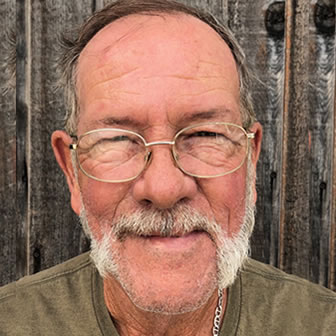
Robert Richendollar, Seaman, U.S. Navy
This veteran visit in Islamorada, FL was a little out of the ordinary as Robert recalled enlisting in the Navy instead of going on to the ninth grade in school.
A notable story from his time served includes his presence one mile at sea off shore of Cuba during the attempted Bay-of-Pigs assault. His vivid recollection and description of B-52 bombers flying at low altitude, with full flaps, loaded with ordinance and gear down was spellbinding. He said the concussion and vibration of the flyover was enough to violently shake the Navy vessel he was patrolling in.
After the service, Robert spent a significant part of his work life with Paul Neal “Red” Adair, the American oil well firefighter who became notable as an innovator in the highly specialized and hazardous profession of extinguishing and capping oil well blowouts, both land-based and offshore.
Learn More
Robert went on to mention that he assisted in extinguishing 9 major fires in Kuwait, but wanted the remainder of his interview and story to be about the passion he nurtures to help and comfort homeless veterans in the Florida Keys and South Florida on their path to rehabilitation.
One of Robert’s most popular events is names “Fish with the veterans in the Keys.”
At the time of this veteran visit there were 6 homeless veterans living aboard Robert’s boats that were dedicated to his upstart initiative named “Active Veterans in America Past & Present.”
Contributions of food and clothing for these veterans are donated from local area merchants. The veterans contribute to this benevolent effort by helping to maintain the grounds, and recondition the donated boats.
As Robert is bootstrapping this effort with another like-minded veteran, all he asks is for donations and contributions of equipment and skill-sets that will further his cause.
If you would like to make monetary, equipment, or skill set contribution to the cause of assisting homeless military veterans, please let us know in the Contact Us section of this website and we will put you in touch with Robert and his organization “Active Veterans in America Past & Present.”
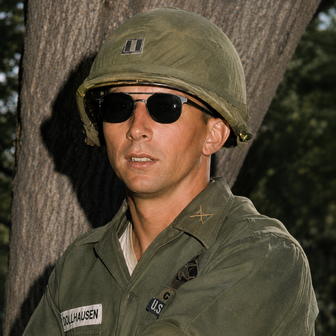
Capt. Hans Dollhausen
Hans C. Dollhausen was born around 1940 and grew up in the Cleveland, Ohio area, where he attended St. Ignatius High School. As a kid, Hans was the kind of boy every neighborhood knew — out on the sandlots playing baseball with his buddies, greeting everyone with the wide, warm smile that would become his trademark for the rest of his life. Those who knew him then would say he was simply “a fine gentleman,” even as a young man.
Hans answered his country’s call and was commissioned as an officer in the United States Army. By 1965, he held the rank of Captain and was assigned as the Commanding Officer of Battery A, 1st Battalion, 16th Air Defense Artillery, 2nd Armored Division — “Hell on Wheels” — stationed at Fort Hood, Texas. His command was no ordinary artillery unit. Captain Dollhausen led the men responsible for the MGR-1 Honest John Rocket, the Army’s most powerful field-deployable weapon system, capable of delivering both high-explosive and nuclear warheads.
Learn More
During the height of the Vietnam War buildup, Captain Dollhausen kept his soldiers sharp, briefed, and battle-ready at all times. “When the call came, we wouldn’t have the luxury of hesitation,” he told his men. “We had to go, right now.” In March 1966, he stood alongside Secretary of the Army Stanley Resor during a live Rocket firing demonstration — a testament to the trust the Army placed in him and his unit. His soldiers remember him as one of the finest commanding officers they ever served under — a leader who earned respect not through rank alone, but through the way he carried himself and cared for his men.
After his military service, Hans returned to Ohio and settled in Independence, where he built a successful sporting goods business and a beautiful family. He married Joan Carole Biales, and together they raised their daughter, Amanda. In time, he became the proud grandfather of Gretchen Carole and Graham Cornel.
Captain Hans C. Dollhausen passed away in October 2014 at the age of 74. He was laid to rest at Holy Cross Cemetery following a Mass of Christian Burial at St. Michael Church. Decades after their service together, the soldiers of the 16th Artillery still speak his name with admiration. He was, as one of them put it, “one of the best of those we served with.”
Captain Dollhausen — your men haven’t forgotten you, sir. Soon, we will all be back in formation.
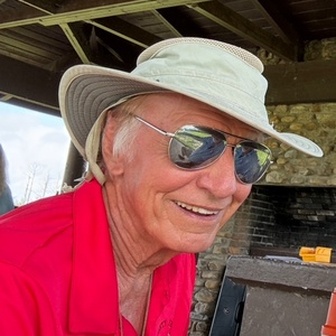
Ernest Benton Brown III, US Marine Major
He was born in Morton’s Gap, Kentucky on 14 Feb 1938, grew up in Minnesota from third grade through college and grad school, went on to the Marines, to senior airline pilot, to acclaimed archer and instructor.
Learn More
His parents were both schoolteachers. In 1958 he enrolled in the Marine Platoon Leader Class (PLC.) It was a brutal twelve weeks at Quantico. He passed the requirements to go to flight school after graduation and officer commission. In June 1960, he and his wife Beth were married, he graduated, and became a Marine Officer all in a three-day period. He went on to a heavy HRS (Army H37) squadron—HMH 462 and spent the next two years in that unit. There were only two HRS squadrons in the Marine Corps and the flying was always interesting. He flew the “Duce” which was a 31,000-pound helicopter with two R2800 engines. At the time, it was the only helo that could carry a 105 Howitzer. The Marines let him out a little early so he could start graduate school in Sept. 1963 at the University of Minnesota. His interest and thesis were on the winter active animals that live under snow cover. His study area was a meadow and surrounding woods about a mile from the headwaters of the Mississippi River, in Itasca State Park, Minnesota. He stayed active in the Reserves and was hired by Northwest Airlines on 8 July 1968. He flew actively as a senior captain for Northwest Airlines until he retired in 1993. Archery has been a lifelong hobby. He has won numerous awards and today is a prominent instructor at the Lee Country Archers in Ft. Myers, FL. He and his wife Beth have been married for 63 years.
Ben was a Veteran visited by SGT Erschik on September 8, 2023
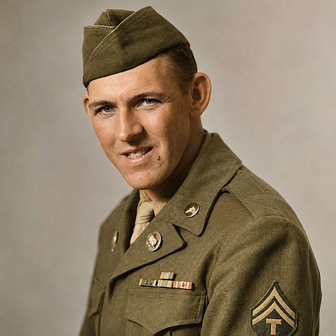
Warner Pye, US Army Technician 5th Grade
U.S. Army Medical Aid Man — World War II — Silver Star Recipient
Warner W. (Bud) Pye was a medical aid man serving with an infantry company during World War II. The infantrymen used to kid him about being the medic. It was all good-natured, and Warner didn’t resent it. He knew they were the men doing the dangerous fighting, while he wasn’t even allowed to carry a weapon. But when an infantryman went down, Warner was the man who crawled toward him, often while bullets zipped overhead and artillery and mortar shells crashed nearby. His job wasn’t to take a life. His job was to save one.
Learn More
In November 1943, Warner’s company was advancing to attack an enemy-held hill in Italy when the men were caught in a devastating barrage of artillery, mortars, machine guns, rifles and grenades. The casualties were heavy, and the intense enemy fire forced the company to temporarily withdraw. Enemy snipers continued firing at the wounded men left behind.
Warner refused to leave them. Despite the continuing enemy fire, he crawled from one wounded soldier to another, administering first aid to every man he could reach. His actions stopped severe blood loss and saved the lives of several soldiers. For his gallantry that day, Private Warner W. Pye was awarded the Silver Star. The men didn’t kid the medic anymore.
But Warner’s instinct to help someone in danger began long before Italy. At his funeral many years later, his family met one of Warner’s childhood friends and learned a story they had never heard.
As boys, they had been swimming in a section of the Illinois River near Peoria when Warner’s friend, who couldn’t swim well, began to sink. While the other boys left the water, Warner realized his friend was in trouble and went back for him, pulling him to safety and saving his life.
Decades later, when the man saw Warner’s obituary, he knew he had to attend the funeral and say goodbye to the childhood friend who had saved his life. He told Warner’s family that perhaps they should have known even then that Warner would someday make a great medic.
Before Italy, before the Army, and before the Silver Star, Warner Pye was already someone who saw another person in trouble and went back for him. Years later, under enemy fire on a hillside in Italy, he was still going back for them.
His family remembers a wonderful father and grandfather who loved his family deeply. He is greatly missed and proudly remembered.
Posthumously listed by his daughter 8-26, Sandra (Pye) Smith
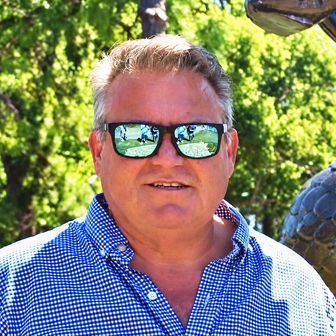
Eric “Ski” Marzewski Army NCO Sgt E5
Eric “Ski” Marzewski grew up in a military family where faith, family, travel, and adventure were part of everyday life. Born in Texas, he spent four childhood years on Terceira Island in the Azores while his father, Ronald J. Marzewski, served in the Navy.
The family later moved to Maryland and eventually Vermont, where his parents built a log home on 15 acres and raised chickens, pigs, and rabbits. His father retired as a Navy Senior Chief after 20 years of service.
Learn More
At just 17, Eric followed his father’s example and joined the U.S. Army, making a six-year commitment to electronic warfare. After basic training at Fort Dix, New Jersey, he completed a 48-week electronic warfare program at Fort Devens, Massachusetts, followed by Airborne School at Fort Benning, Georgia.
Instead of joining the 82nd Airborne, Eric was sent to Berlin during one of the most historic periods of the Cold War. He served there during the fall of the Berlin Wall and reunification of Germany, working around-the-clock electronic warfare missions.
After helping close the Berlin field station, Eric returned to Fort Devens, was promoted to Sergeant E-5, and became NCOIC supporting Base Realignment and Closure activities. While completing his bachelor’s degree in computers with a minor in management, he received a rare assignment supporting a mission at the National Security Agency. He ultimately left the Army with an honorable discharge and several military awards, although he remains modest about them: “I just did my job, and I did it as well as I could. I would do it again.”
After the Army, Eric built a career in computers, communications, networking, consulting, and enterprise technology. He spent 10 years with Northrop Grumman, where he led teams and helped introduce large-scale automation and operating efficiencies.
Today, Eric’s priorities are simpler: faith, family, fellowship, health, and helping others. Despite chronic nerve damage stemming from a spinal condition first diagnosed during his Army years, he has lost more than 75 pounds and continues working to stay active. He credits his service dog, Odin, with changing—and saving—his life.
Eric enjoys Teslas, boating, electric biking, gardening, growing bananas, volunteering with the VFW, and making what he proudly calls “the best garlic dill pickles in the world.”
Asked how he wants to be remembered, Eric’s answer is simple:
“Man of God. Family first. Fellowship with others. Work hard.”